
Calhoun Projected and Actual Release
MDOC uses the exact public label Tentative Release Date. Its materials define that date as an anticipated release after adjustments for earned time and time served. Maximum Discharge means the expected end without early-release allowances and is treated as fixed. Parole eligibility, earned-release supervision, and a tentative date each mark a different legal or administrative point.
An actual release is a completed custody event. The jail's released-date field, a state release or discharge certificate, and the receiving agency's record can prove different parts of the timeline. A projected date cannot do that. If a current MDOC profile still gives a facility location, the estimate must not be rewritten as though the person has already left.
Scheduled vs actual release: A tentative date predicts a possible event; only the agency's completed release record confirms that it occurred.
A pretrial person at Calhoun County Jail has no sentence-based date to calculate. Bond, dismissal, a court order, or later sentence controls the outcome. The court can authorize release before jail staff finish checks, so the order date and physical departure time may differ.
Find a Calhoun Projected Release Date
First identify who owns the sentence. The MDOC state-custody and tentative-date search applies to a state prisoner, including someone transferred from Calhoun while waiting for an MDOC bed. It accepts first name, last name, or MDOC ID. A person held only on a county case may never appear there.
- Confirm whether the person is pretrial, serving a Calhoun county sentence, or serving an MDOC sentence. Do not start with a state formula before resolving custody type.
- For MDOC custody, search with the MDOC ID when possible. Otherwise use the name and compare the returned identity, sentence, location, and conviction-county fields.
- Open the correct detail and copy the field exactly as Tentative Release Date. Keep it separate from parole eligibility, ERS, and Maximum Discharge.
- Ask MDOC Records or the case manager for the current time sheet when the public date needs support. Sentence calculation, jail credit, and eligibility questions belong to MDOC.
- For a county sentence, contact Calhoun County Jail for its time computation and jail-docket entry, then compare the sentencing order from the proper court.
- After the expected event, obtain the actual release or discharge record. A tentative date alone never closes the custody timeline.
The official MDOC search entry shows the fields used to begin a state sentence check.
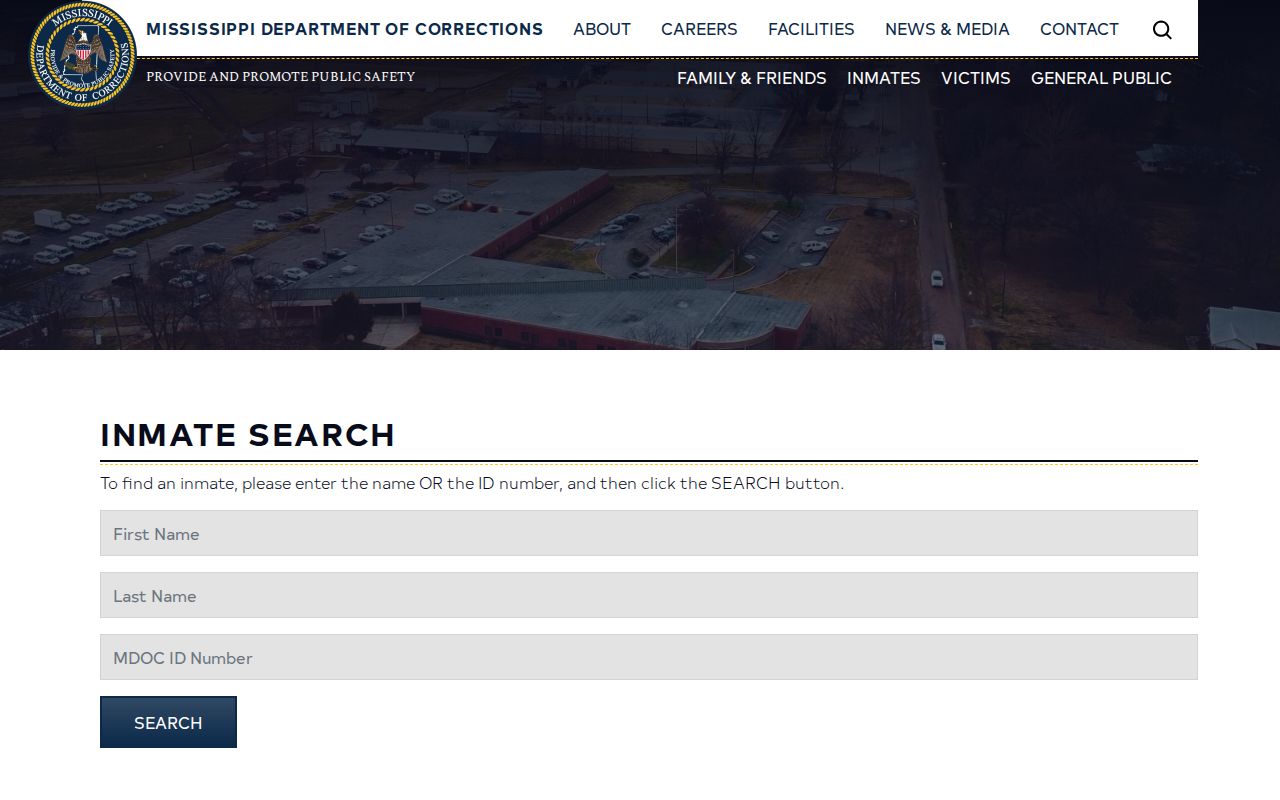
This state portal is useful only when the person entered MDOC custody; it is not a general Calhoun County jail release search.
Note: A blank MDOC search can reflect custody scope or record availability and does not prove a Calhoun County release.
Calhoun MDOC Release-Date Fields
A current MDOC detail example demonstrates the public interface, not a released Calhoun County person. It includes name, MDOC ID, photograph, entry date, location, unit, location-change date, sentence count and length, offense, county of conviction, sentence date, and Tentative Release Date. Those fields provide context for a match and calculation. They are state-custody fields, not county booking fields.
| MDOC field | How to use it |
|---|---|
| MDOC ID | Match the state record to the correct person |
| Location and unit | Check whether MDOC still reports a custody placement |
| Entry or location-change date | Place state intake and movement in sequence |
| Sentence details | Identify offense, term, sentence date, and conviction county |
| Tentative Release Date | Read MDOC's current forward-looking estimate |
The official interface example displays the exact tentative-date label and related state fields.
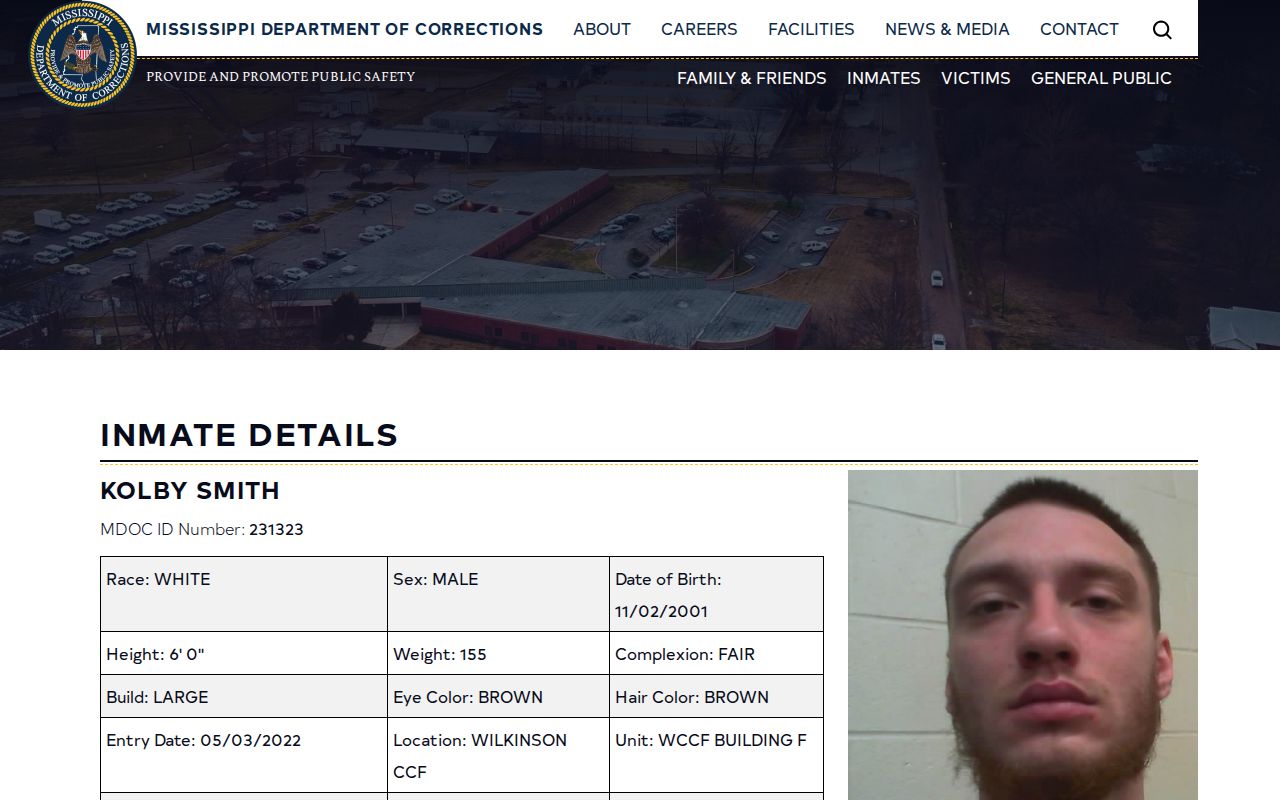
The pictured record is evidence of interface design only and must not be described as a released Calhoun County inmate.
Research did not verify a public historical MDOC profile labeled Released or Discharged. A person may leave the public search after full discharge. When that occurs, request the release or discharge certificate and actual date from MDOC Records rather than claiming the missing profile proves release.
Calhoun State Earned-Time Rules
For many eligible Mississippi state sentences after June 30, 1995, Mississippi Code §47-5-138 generally permits 4.5 days of earned time for each 30 days served for good conduct and performance. The credit is capped at 15 percent of the sentence and remains subject to exceptions. Release under this provision proceeds to earned-release supervision through sentence expiration, and the person retains inmate status.
That rule is the source of the common “serve 85 percent” shorthand, but it is not a universal formula. Section 47-5-139 excludes or limits categories that include life sentences, habitual offenders, sex crimes, forfeited-credit cases, and specified armed-robbery minimums. Other trusty or meritorious credits have their own rules. Possible credits cannot simply be added together.
Serious rule violations can cause earned time to be lost. Crime-date law, offense type, prior record, and sentence form also matter. The public estimate reflects MDOC's calculation from the record in its possession, not a simple percentage applied to the number printed in a court sentence.
The 15 percent cap does not prove that every Mississippi inmate serves exactly 85 percent or qualifies for earned release.
Calhoun Parole Eligibility Dates
Parole eligibility identifies when legal consideration may begin. It is not the same as a tentative release date, earned release, or a grant. For many offenses on or after July 1, 2014, §47-7-3.2 uses different minimum fractions: generally 25 percent or ten years, whichever is less, for a nonviolent crime; 50 percent or twenty years for a statutory violent crime; and 60 percent or twenty-five years for armed robbery, drive-by shooting, and carjacking.
Those categories carry detailed limits and exclusions. Life, habitual, sex-offense, trafficking, and other sentences cannot be reduced to a short county-wide rule. Earned time also cannot cut a statutory parole minimum. The full sentence history, crime date, and current law must be reviewed for the named person.
A Board grant still does not set the moment when someone walks out. Release planning, an approved address, holds, and agency processing remain relevant. MDOC materials state that physical processing may take 30 to 45 days and requires a discharge certificate. The case manager or MDOC record supplies the operational date.
Note: Eligibility allows consideration under a statute; it does not promise a grant, a processing date, or release to the community.
Calhoun County Jail Date Calculations
No published Calhoun County good-time policy was found. MDOC's state-prison earned-time formula must not be applied to a local jail sentence without evidence. Ask Calhoun County Jail for the time computation and permanent jail-docket entry. Then compare the proper sentencing order from Circuit, Justice, or Municipal Court, depending on which court owns the case.
A county jail booking can also involve a state-bed wait, Community Corrections placement, another-agency hold, or a parole or probation matter. In those cases, the end of Calhoun custody may be a transfer. Ask for the recorded destination or receiving agency. An MDOC location after the Calhoun entry ends supports a state handoff, not a community release.
For a pretrial case, review bond and court orders rather than seeking a sentence credit calculation. A bond order can permit release while the charge continues. The jail record supplies the actual custody-end entry, which may occur after the court signs the order. The broader Calhoun County release search and record route explains how those local records fit together.
Why Calhoun Release Dates Change
MDOC considers more than sentence length. It uses the law tied to the crime date, concurrent or consecutive sentence structure, preconviction jail credit, prior convictions, habitual status, offense exclusions, earned credits, discipline, programs, detainers, judicial conditions, and an approved release address. A change in any supported input can move the tentative date.
| Factor | Possible effect on the date | Record to check |
|---|---|---|
| Jail credit | Credited preconviction time can alter the state calculation | MDOC time sheet and court record |
| Earned time | Eligible credit may move an estimate earlier | MDOC calculation |
| Discipline | Forfeited credit can move it later | MDOC time sheet and releasable discipline record |
| Detainer or hold | Another agency may prevent release to the community | Receiving agency and custody record |
| Court order | A corrected or new order can change sentence inputs | Sentencing court docket |
| Parole decision | A grant may create a release path but still requires processing | Parole Board and MDOC records |
| Release address | An unapproved plan can delay a conditional release | Case manager or Community Corrections |
Do not choose the most favorable date when two records differ. Note each source and timestamp. An online profile may lag a fresh calculation, and a court order may precede the jail or prison event. Ask the agency that owns the calculation to reconcile the conflict.
Confirm Calhoun Release-Date Events
Before release, the MDOC profile and current time sheet provide the best state estimate. MS SAVIN can add a pending custody-event notification. The Calhoun County VINELink inmate search explains how to register without assuming an unverified PIN flow. A VINE alert remains a prompt to check the feeding agency.
After the date passes, seek proof of what occurred. An MDOC discharge or release certificate records the actual state event and type. An active-parole result shows conditional community supervision, not final discharge. For a Calhoun county episode, use the sheriff's released-date field during its short display and the permanent jail docket afterward.
If the expected date passes without an event, do not assume the public profile is wrong. A hold, recalculation, release-plan issue, or update lag may explain the gap. Save the displayed date and contact MDOC Records or the case manager for the current calculation.
MDOC's written records-request route can be used for the certificate, actual date and type, time sheet, MDOC ID, and last facility. MDOC Records handles time, jail credit, and eligibility questions at PO Box 24388, Jackson, MS 39225, by phone at 601-933-2889, and by email at MDOCRecordsDepartment@mdoc.state.ms.us.
Note: Keep the tentative date, event alert, actual release, supervision start, and final discharge as separate dated facts.